
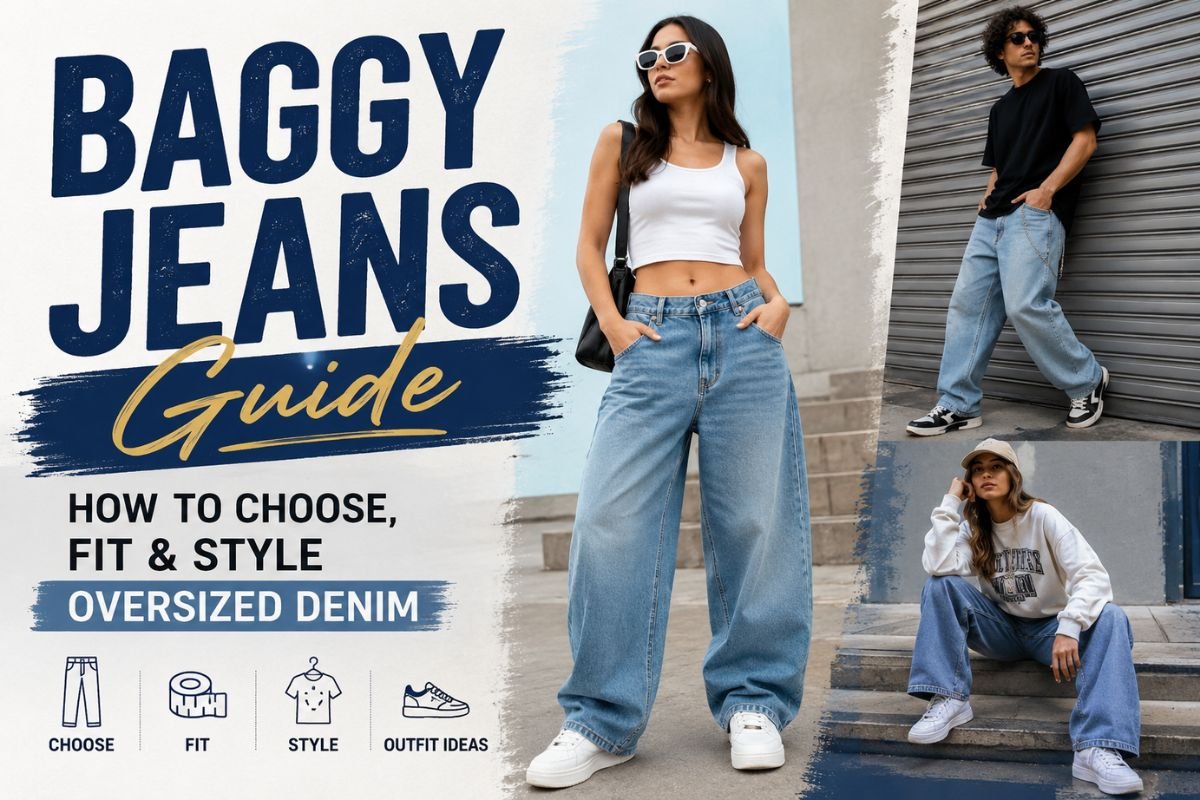
Baggy jeans are designed to fit the hips, thighs, and legs comfortably with a relaxed silhouette. They give you more breathing room, while softening the shape to a light, drapey silhouette as opposed to classic straight or slim-fit denim. They are appealing because they blend comfort with a defined fashion identity, and this makes them ideal for streetwear, casual wear, and trendy outfits.
Baggy jeans are hot again, largely as a result of the attention this season’s slouchiest styles command — not to mention their innate mixability with many relaxed or retro 90s ensembles. Once somehow connected with skateboarding, hip-hop and youth counter-cultures, it has now infiltrated everyday styling, nose-diving into a blank Mothers-Continue eating-one-less-stacker-lunchbox-wool.
The trick to pulling off oversized denim is not to just go one size up. The best results will always emerge from an understanding of rise, leg shape, fabric weight, and proportions with styling balance.
Quick Baggy Jeans Fit Guide
| Feature | Common Options | Best Use |
|---|---|---|
| Rise | High-rise, mid-rise, low-slung | High-rise for defined waist; low-rise for relaxed streetwear |
| Leg Cut | Straight baggy, tapered, wide-leg | Depends on preferred silhouette |
| Fabric | Rigid cotton, stretch denim | Rigid denim for structure; stretch for comfort |
| Wash | Light, medium, dark, black, vintage | Determines overall outfit character |
| Occasion | Casual, streetwear, smart-casual | Styling and footwear determine formality |
The History of Baggy Jeans: From 90s Subculture to Modern Fashion
While the baggier denim shapes go back more than a decade, it was during the 1990s that loose-fitting jeans were fully ingrained and recognized within a cultural fashion subtext.
Baggy pants borrowed from skate culture for their ease of motion, matching perfectly under the aforementioned oversized T-shirts, sweatshirts, hoodies, and skate shoes. Concurrently, hip-hop style embraced this fixated a larger fit and linked loose denim with music, self-expression, and youth.
If the following decades were defined by relaxed silhouettes, there was always a retro pattern operating in fashion cycles. After skinny jeans solidified themselves as a big part of the 2000s and remained in trendy circulation throughout the following decade, interest gradually turned to wide-leg jeans, oversized denim, carpenter jeans, relaxed straight cuts, and baggy silhouettes.
Today, baggy jeans are no longer relegated to a single subculture. Pair them up with a minimalist shirt, fitted blazers, knitwear, boots, and sneakers, as well as statement accessories. That adaptability also turned them from a trend into a reliable category of the closet.
Baggy Jeans Fit Guide: Choosing the Right Silhouette
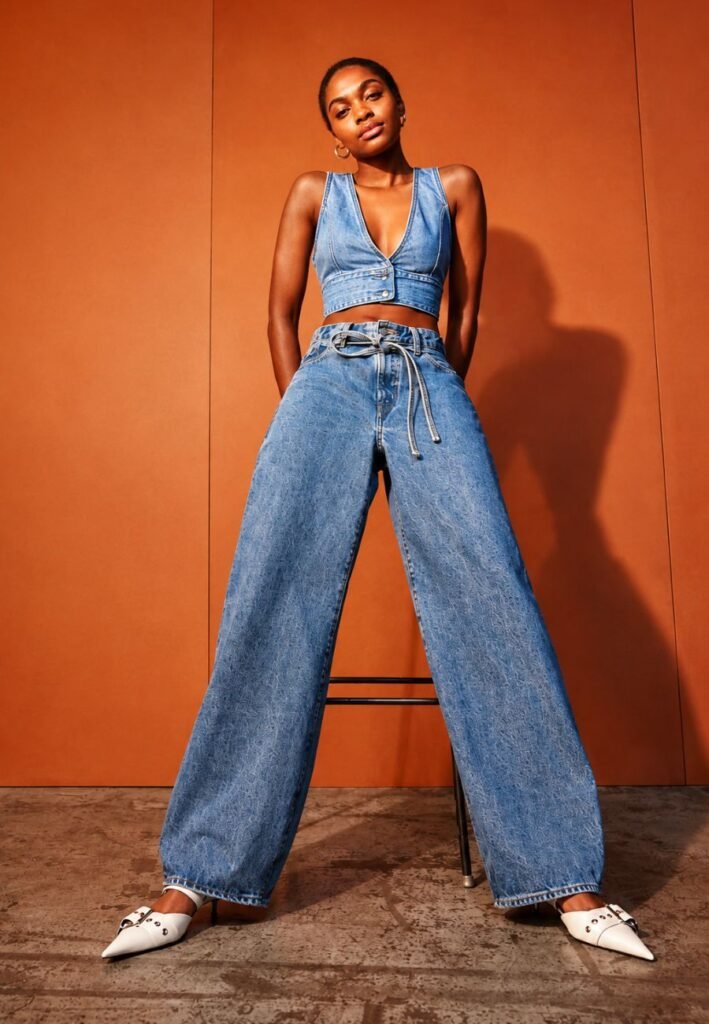
Not every pair of baggy jeans creates the same visual effect. The cut should be selected according to both personal preference and the proportions of the complete outfit.
High-Waisted Baggy Jeans
High-waisted baggy jeans sit closer to the natural waist while maintaining volume through the hips and legs. They work particularly well with tucked-in shirts, fitted tops, cropped jackets, and shorter knitwear because they establish a clear waistline.
Mid-Rise Baggy Jeans
Mid-rise designs provide a balanced alternative. They are particularly versatile for everyday outfits and can be worn with T-shirts, sweatshirts, button-down shirts, or relaxed jackets.
Low-Slung Baggy Jeans
Low-rise and low-slung silhouettes produce a distinctly casual, contemporary streetwear appearance. They work naturally with oversized tops and layered outfits but require more attention to proportions because both the upper and lower halves can become visually loose.
Tapered Baggy Jeans
Tapered baggy jeans retain room around the thighs while gradually narrowing toward the ankle. They are useful when we want the comfort of a relaxed fit without the visual width of extremely wide-leg denim.
Wide-Leg Baggy Jeans
Wide-leg jeans maintain substantial volume from the upper leg toward the hem. They create a dramatic silhouette and are particularly effective with structured or cropped tops.
How to Style Baggy Jeans
Casual Streetwear Look
For a classic streetwear outfit, we can combine baggy jeans with a heavyweight T-shirt, hoodie, sweatshirt, or relaxed overshirt. Sneakers with a substantial sole generally complement the volume of the denim.
A simple formula is:
Baggy jeans + fitted or relaxed T-shirt + overshirt + sneakers + minimal accessories
For a stronger 90s-inspired aesthetic, consider vintage washes, graphic tees, baseball caps, and retro sneakers.
Elevating Baggy Denim for Smart-Casual Outfits
Baggy denim does not automatically have to look informal. Dark-wash or clean-finish denim can be paired with a structured blazer, crisp button-down shirt, fine-gauge knitwear, leather belt, and refined footwear.
The important principle is contrast. When the jeans are relaxed, structured garments and polished accessories can prevent the entire outfit from appearing overly casual.
A dark pair of baggy jeans with a neutral blazer and leather loafers can create a modern smart-casual appearance without sacrificing comfort.
Footwear Pairings
Sneakers: Chunky, retro, minimalist, and low-profile sneakers can all work. The sneaker should visually relate to the width of the jeans.
Boots: Chelsea boots, work boots, and sleek leather boots provide structure beneath wide denim. Boots are particularly useful during colder seasons.
Loafers: Loafers create a sophisticated contrast and can make dark baggy jeans appropriate for elevated casual outfits.
Heels: For fashion-forward styling, pointed or heeled footwear creates a deliberate contrast with oversized denim and can visually lengthen the leg.
Fabric Weight, Wash, and Denim Quality
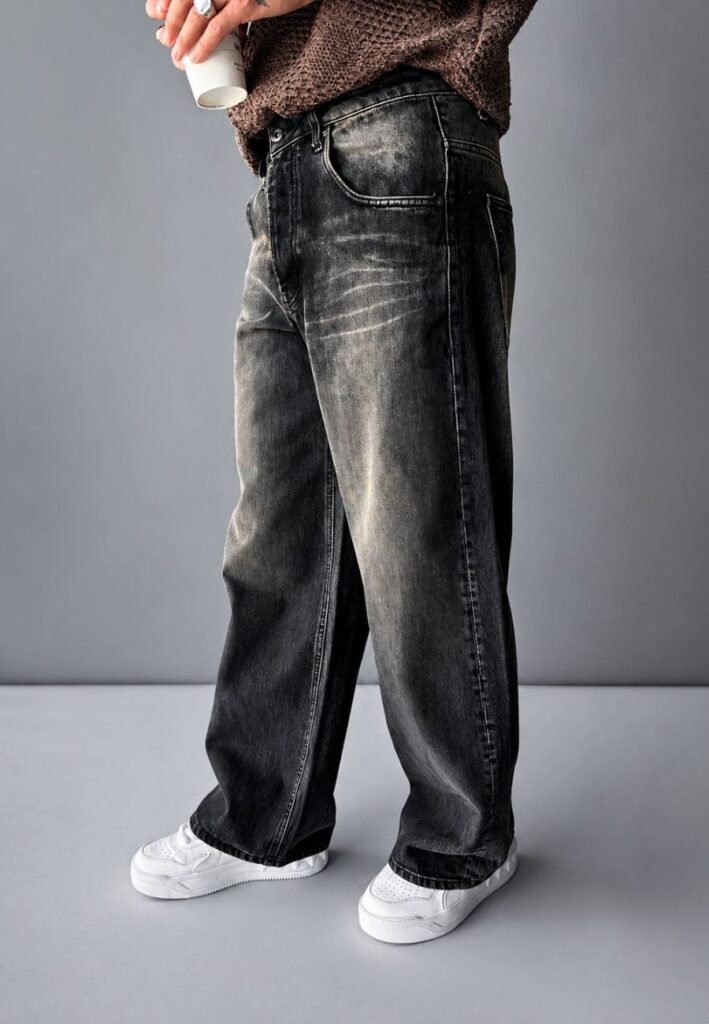
Denim quality is influenced by several factors, including fiber composition, weave, finishing, construction, and fabric weight.
Denim weight is commonly discussed in ounces per square yard (oz/yd²). Lightweight denim generally drapes more easily and feels cooler, while heavyweight denim offers greater structure and durability.
Light-Wash Denim
Light washes create a relaxed, vintage appearance. They work especially well for spring and summer outfits and pair naturally with white, cream, grey, pastel, and washed tones.
Dark-Wash Denim
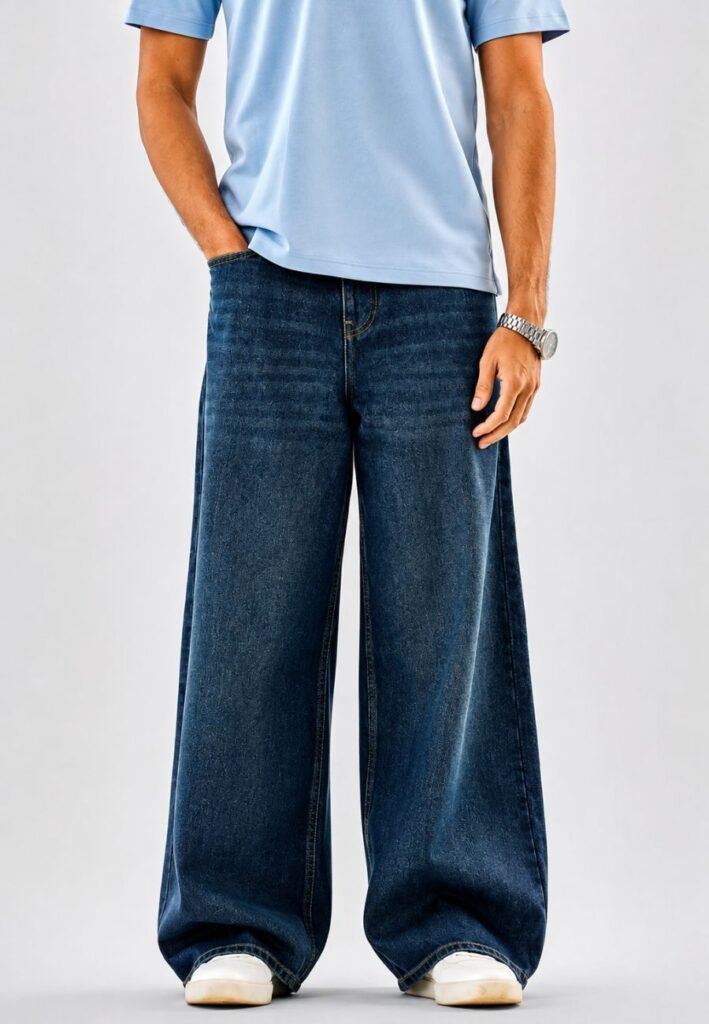
Dark denim produces a cleaner and more polished appearance. It is one of the most versatile choices for smart-casual styling.
Acid-Wash Denim
Acid-wash finishes create high-contrast patterns that strongly reference vintage fashion. Because the finish is visually prominent, simpler tops and accessories usually produce a more balanced outfit.
Raw Denim
Raw denim has received minimal artificial washing or finishing after production. It tends to have a firmer hand initially and can develop distinctive fading through wear.
When purchasing rigid raw denim, we should not assume that every pair will fit identically. Shrinkage, fabric construction, finishing, and manufacturer specifications vary considerably.
Baggy Jeans for Different Body Types
| Body Shape | Recommended Cut | Styling Approach |
|---|---|---|
| Hourglass | High-rise tapered or straight baggy | Define the waist with tucked or cropped tops |
| Athletic | Mid/high-rise relaxed or wide-leg | Add structure through jackets and belts |
| Petite | High-rise, moderate-volume baggy | Avoid excessive stacking and use streamlined footwear |
| Tall | Wide-leg or extra-long baggy | Embrace longer proportions and substantial footwear |
| Plus-Size | Structured high-rise or relaxed wide-leg | Focus on comfortable waist placement and balanced volume |
These categories are guidelines rather than rules. Personal proportions, preferred styling, rise placement, and garment length ultimately determine how a particular pair looks.
5 Wardrobe Essentials to Wear With Baggy Jeans
- Cropped or fitted T-shirts – They create contrast against loose denim and help establish visual proportions.
- Oversized blazers – A structured blazer can transform casual denim into a sophisticated outfit.
- Chunky or leather belts – Belts add definition around the waist and act as an important accessory.
- Classic sneakers – Retro and contemporary sneakers both complement relaxed denim.
- Button-down shirts – A crisp shirt creates a useful contrast between polished upper-body styling and relaxed denim.
Should We Size Up for Baggy Jeans?
Usually, we should not automatically size up simply because a pair is labeled baggy.
A baggy cut is already engineered with additional room through specific areas of the garment. Sizing up can create excessive waist looseness, unnecessary stacking, and poor proportion.
Instead, we should check the brand’s waist measurement, hip measurement, thigh measurement, front rise, inseam, and leg opening. Measurements are more reliable than assuming that the same numerical size will fit identically across brands.
If the intended aesthetic is deliberately oversized, sizing up may be appropriate, but it should be a conscious styling choice rather than a requirement.
How to Care for Baggy Jeans
Proper maintenance can significantly extend the useful life of denim.
- Wash denim only when necessary rather than after every wear.
- Follow the manufacturer’s care label.
- Turn jeans inside out before washing when appropriate.
- Use a gentle washing cycle for delicate or heavily finished denim.
- Avoid excessive heat.
- Air-dry when possible.
- Avoid aggressive tumble drying if maintaining the original fit is important.
- Store jeans in a dry, ventilated environment.
- For raw denim, follow the manufacturer’s specific washing recommendations.
Heavyweight denim can take longer to dry because of its greater fiber density. Excessive heat can also contribute to shrinkage and changes in fabric shape.
10 Interesting Facts About Baggy Denim
- Baggy jeans are defined by their silhouette, not simply by wearing a larger size.
- Relaxed denim became strongly associated with 1990s skate and hip-hop fashion.
- Denim weight is commonly measured in ounces per square yard.
- Rigid denim generally provides more structure than highly elastic denim.
- A high rise can visually define the waist when paired with an appropriate top.
- Tapered baggy jeans provide volume without maintaining maximum width at the hem.
- Dark denim can generally appear more polished than heavily distressed light denim.
- Wide-leg and baggy jeans are related silhouettes but are not technically identical.
- Footwear width can significantly influence how balanced a wide denim silhouette appears.
- Baggy jeans can work across age groups when the rise, wash, length, and accompanying garments suit the wearer.
Final Verdict: Are Baggy Jeans Worth Adding to the Wardrobe?
In the modern denim game, evolution is always moving forward-and baggy jeans provide one of the most adaptable relaxed silhouettes. They’re comfortable, able to move like a goddamn champion with some retro influence and excellent styling versatility. When the wash, proportions and adjacent garments are right, they can carry everything from a relaxed streetwear getup to a smart-casual ensemble.
The most effective approach is to think of baggy denim as a fit and proportion exercise instead of just oversized. Prior to picking a set, we must factor in rise, thigh space, leg opening, inseam, fabric weight, wash and shoes.
Whether you love the retro 90s look or modern streetwear, minimalist fashion or simply want something fresh to wear to elevate casual dressing, baggy jeans can easily be established as a go-to building block for a contemporary wardrobe.
Frequently Asked Questions About Baggy Jeans
Q. Are baggy jeans in style right now?
Yes. Baggy jeans remain a major contemporary denim silhouette, particularly within streetwear, casual fashion, and relaxed tailoring. Their popularity is supported by the broader movement toward comfortable proportions and looser clothing. However, the most current approach is not necessarily extreme oversized dressing. Moderate baggy cuts, relaxed straight legs, wide-leg denim, and structured oversized silhouettes provide more adaptable options for everyday wardrobes.
Q. How do we make baggy jeans look professional?
Choose a clean, dark or medium-dark wash without excessive distressing and combine it with structured garments. A blazer, crisp shirt, fine knit sweater, leather belt, and loafers can make baggy denim considerably more refined. The fit should remain intentional rather than excessively oversized. For conservative workplaces, dress codes should take priority because even sophisticated denim may not be appropriate in formal professional environments.
Q. Should we size up when buying baggy denim?
Not necessarily. Baggy jeans are already constructed with additional ease. We should begin with the brand’s recommended size and compare the garment measurements against our own. Size up only when we specifically want a more oversized appearance or when the particular brand’s measurements indicate that a larger size is appropriate.
Q. What shoes look best with wide-leg baggy jeans?
Sneakers, boots, loafers, and heels can all work. Chunkier footwear often balances substantial denim, while sleek shoes create deliberate contrast. The most important consideration is the relationship between the hem and footwear. Excessive fabric pooling can overwhelm the outfit, while a controlled break or clean drape generally produces a more intentional result.
Q. Do baggy jeans look good on short or petite heights?
Yes. Petite wearers can successfully wear baggy jeans by controlling volume and length. High-rise designs can help establish a longer visual line, while moderate-width legs are often easier to style than extremely wide silhouettes. Cropped jackets, tucked tops, and footwear with some height can also help maintain balanced proportions. The goal is not to avoid volume but to control where that volume appears.
Q. What is the difference between wide-leg and baggy jeans?
The terms overlap, but they describe different characteristics. Wide-leg jeans primarily emphasize the width of the leg from the upper thigh or hip toward the hem. Baggy jeans generally emphasize overall looseness and additional room through the seat, thighs, and legs. A pair can therefore be both baggy and wide-leg, but the two terms are not always interchangeable.
Q. How do we wash heavyweight denim without ruining the fit?
Always check the manufacturer’s care instructions first. Heavyweight denim generally benefits from limited washing and controlled drying. Turning jeans inside out can help protect the exterior finish, while avoiding excessive heat can reduce the risk of unwanted shrinkage. Air-drying is often preferable when preserving dimensions and fabric characteristics is a priority.
Q. Can older adults wear the oversized denim trend?
Absolutely. Baggy denim is not restricted to a particular age group. A mature wardrobe can incorporate relaxed denim through cleaner washes, tailored shirts, structured jackets, refined footwear, and restrained accessories. The most important factor is selecting a comfortable rise and proportion rather than attempting to reproduce a youth-oriented outfit exactly. Personal style should determine the degree of looseness, distressing, and trend influence.